Showing posts with label william safire. Show all posts

Wednesday, October 3, 2018

Remember to never split an infinitive


This is the last of the William Safire writing “rules” for me. I’ve had such fun considering them. We all know how bogus this one is, right? Every since Star Trek: To boldly go where no (man/one) has gone before. The latter, “one,” for Next Generation, since they finally realized that there were women along and they hadn’t been there before either.

I’ve read that the origin of rules like this stem from Latin scholars, or maybe just snobs. It’s impossible to split an infinitive in Latin, since they are only one word. Esse, amare, videre, regere, audire (to be, to love, to see, to rule, to hear). Okay, but just because you can’t split them in Latin, doesn’t mean you can’t split them in English. Ours are TWO words. You can always split two words. I’m always eager to find places to happily break this rule. Which, it seems, never was a rule.*

Go ahead, cleave those infinitives, if it makes sense in your context!


axe photo from morguefile.com


Wednesday, September 12, 2018

Do not put statements in the negative form.


This is William Safire’s third rule of grammar. Two more to go.


Here’s the late, great Ella, telling us about it. 

Using the advice, the title, above, would be: Put statements in the positive form.

Right? Okay, but don’t we have to use negative statements sometimes? I honestly don’t know what this one is about.

But I did some research on negation and found some esoteric things.
Like, the subtle difference between these two statements:
      (1) I don't think [that he came] (I don't know what he did)
          (2) I think [that he didn't come] (I think that he stayed away)

And these not-so-subtly different statements:
      (1) I didn't say [that he lied] (I said nothing)
          (2) I said [that he didn't lie] (I said that he told the truth)

The above are taken from:

Any more thoughts on this?


Wednesday, September 5, 2018

Verbs has to agree with their subjects


This is William Safire’s fourth rule of grammar. (I have three left, then I’ll have to start thinking up new blog topics.)


What do you think? Does this drive you crazy? It does me!

Easy examples:
wrong:  The girls has talked to me.
right: The girls have talked to me.

wrong: We talks to the girls.
right: We talk to the girls.

The slightly obscure, to some people, examples are the problems.

wrong: Neither of them have talked to me.
right: Neither of them has talked to me.
Neither is singular and it’s the subject.

wrong: Janet and Kaye has both talked to me.
right: Janet and Kaye have both talked to me.
Both talked, so plural.

wrong: Janet or Kaye have talked to me.
right: Janet or Kaye has talked to me.
Only one talked, so singular.

Which one here is wrong or right?
The girls talked to me.
The girl talked to me.
AHA, doesn’t matter here.

I took some of this from here:

Wednesday, July 25, 2018

A writer must not shift your point of view.


I’m a big fan of this one! I know there are popular (VERY popular) writers who shift POV within scenes, within paragraph, sometimes within sentences. For the life of me, though, I can’t figure out how to read those writers.


I have to use clean POV for my own sanity. If I’m in Mary’s head, there has to be a break before I hop over to Jane’s head. It can be a new scene. Or it can be the same scene repeated from an alternate POV. I kind of like to do those when I can manage them.    

first photo from morguefile.com lauramusikanski
second photo from morguefile.com kconner


Wednesday, July 11, 2018

Beginnings and Endings


And don't start a sentence with a conjunction. (Remember, too, a preposition is a terrible word to end a sentence with.)

What do you think? Are these so terrible? And if so, why?

Okay, I’ll admit to doing this a whole lot in some first drafts. And in subsequent drafts, to, if I’m honest with you. But sometimes you have to start with the conjunction. That’s all there is to it.


As for ending with a preposition? There’s the ironic definition of a preposition is "A word you mustn't end a sentence with." Besides, this is actually a bogus rule. Another example of trying to equate English to Latin. You can’t do it in Latin, but you sure can in English. And there’s nothing wrong with it. Just like there’s nothing wrong with splitting infinitives.


The preposition prohibition began in the 1600s and has been continued, incredibly, ever since then. Here are thoughts on it. http://itre.cis.upenn.edu/~myl/languagelog/archives/004454.html

 photos from morguefile.com


Wednesday, June 27, 2018

Don't overuse exclamation marks!!


This is a perpetual topic for writers. There are a surprising number of discussions on different topics relating to these.

First of all, is it a point or a mark?
Both, I guess. I don’t know which is preferred.

Next, can you use more than one in a row, such as in the title of this blog?

“Never use multiple exclamation points in a professional setting!!! Again, this is fine to use in informal and personal context, however most professionals agree that there should be ONE end punctuation mark to each sentence. Professionally, it doesn't reinforce the exclamation, it just breaks grammatical rules.”
(Strange boldings there, if you ask me.)
(Really, though, this whole article is good if you want to delve.)
(The article below says that if you’re going to use more than one, use three, never two.)
(I wonder how many parentheses in a row are too many.)

When should you use them and not use them in fiction writing?

Not for emphasis, hilarity, or excitement.

Use the writing to give emphasis and excitement. And using them to be funny is like laughing at your own joke. Or so this site says:

It also says you should use them for:
Raised voices, to make fun of characters, and in writing for children.

Okay, raised voices, I’ll go along with that.

The expanded explanation on the second one is to make sure the reader knows that what you wrote isn’t serious. I’m not sure how this is different than laughing at your own joke, but whatev!

And for children? You know, it’s hard to get them to use those inside voices. Maybe that should be rethought.

Here’s what Elmore Leonard famously said:
“Keep your exclamation points under control. You are allowed no more than two or three per 100,000 words of prose." 

photo from morguefile.com

Wednesday, June 20, 2018

Place pronouns as close as possible, especially in long sentences, as of 10 or more words, to their antecedents.


Probably a good idea, mostly, unless you’re backloading. 


Do you know about backloading? It’s an effective way to end a scene or chapter. From a course I gave in Atlanta in October of 2016, here’s an example:

A feeling of dread came over me as I opened the door. (Then you viciously cut to another scene and leave them hanging.)
Better would be this:
As I opened the door, I was overcome with an inexplicable feeling of dread.

Door is not the most important or evocative word in that cliffhanger sentence. Dread is so it needs to go last to leave an impression. Of course, in this case, dread is not a pronoun. Let me see if I can come up with a backloaded sentence splitting the pronoun from the antecedent.

How about this?
The boys, tiring after hours of seeking a way out of the dark, dank cave, felt the warmth and wetness of their own tears.

Can you think of better ones?

backhoe photo by Dan Zen from Flickr through http://www.everystockphoto.com/

Wednesday, June 13, 2018

Writing carefully, dangling participles must be avoided.


This one drives me nuts! Unlike the William Safire “rules” I’ve posted before, you really should NOT do this.

Unless you’re entering this contest.

Here’s a sampling from the page:
“I found a dollar walking home.” I wonder where the dollar lives.

“Walking past the cemetery, an open coffin frightened me.” An open coffin walking around would scare me, too.

“Hopping from foot to foot, the crosstown bus came into view.” I didn’t even know buses had feet!

Another amusement source for these can be headlines.

Here are a few of these:
Dealers will Hear Car Talk at Noon—I’d show up for that. I wonder if David Hasselhoff will be there.
Juvenile Court Tries Shooting Defendant—I hope the court missed. Poor kid.
Squad Helps Dog Bite Victim—Ouch!

I hope you had fun with these.

photo from morguefile.com


Wednesday, June 6, 2018

If any word is improper at the end of a sentence, a linking verb is.


More of William Safire’s (tongue in cheek) Rules for Writers:
If any word is improper at the end of a sentence, a linking verb is.

from morguefile.com


I hope some of you are having as much fun with this series as I am.

First of all, you may ask (I did), what exactly IS a linking verb? This source*** says that it’s a verb that can be replaced by a form of the verb “to seem”, as used.

Thus:
*The day looked beautiful.
*The day seemed beautiful.

However, this doesn’t pass the test:

*He looked through the window.
*He seemed through the window.

Or, a verb that can be replaced with a form of “to be”.

Like so:
*Bob feels (is) fine.
*This dress looks (is) too big for you.
*My sandwich tastes (is) spoiled.

Now, should we really never use those verbs at the ends of sentences? Never say never, right? There are places you could use them.

*An explosion went off behind him and he turned around and looked. (I guess “at it” is implied).

This, I think, is a violation.

*I don’t like the way my sandwich tastes.

I’ll welcome any comments or examples you come up with. (I’ll get to that pesky preposition thing in a later post.)

(Barbara Goldstein, Jack Waugh and Karen Linsky, Grammar to Go: How It Works and How To Use It, 3rd ed. Wadsworth, Cengage, 2010)


Wednesday, May 30, 2018

Take the Bull by the Hand


Lucky number 13 on William Safire’s (tongue in cheek) Rules for Writers:
Take the bull by the hand and avoid mixing metaphors.


I love this one. Whenever I hear someone mix a metaphor, it makes me laugh. Or at least a slight smile. I try not to laugh AT people. And you never know if they’re doing it on purpose or not. They’re great for humor. In fact, here’s a funny word for it: mixaphor. That’s a perfect description!

Here are some actual quotes:
We'll have a lot of new blood holding gavels in Washington."
(Georgia Congressman Jack Kingston, quoted in the Savannah Morning News, November 3, 2010)

"I knew enough to realize that the alligators were in the swamp and that it was time to circle the wagons."
(attributed to Rush Limbaugh)

From sports, a reliable source for these:
"'Obviously, it's been a very difficult two days for us,' Nelson said. 'We kind of saw the writing on the wall Friday night. It's just apples versus oranges, and it's not a level playing field by any means.'"
("Seabury’s Football Team Done for the Season." Lawrence Journal-World, September 22, 2009)

An older one:
"Sir, I smell a rat; I see him forming in the air and darkening the sky; but I'll nip him in the bud."
(attributed to Sir Boyle Roche, 1736-1807)

And a nice, long, complicated one:
"I don’t think we should wait until the other shoe drops. History has already shown what is likely to happen. The ball has been down this court before and I can see already the light at the end of the tunnel."
(Detroit News, quoted in The New Yorker, November 26, 2012)

 Sources: https://www.thoughtco.com/what-is-a-mixed-metaphor-1691395
Picture from: https://en.wikipedia.org/wiki/Running_of_the_Bulls; by Baltasar Garcia, 10 July 2007 (https://www.flickr.com/people/25742336@N00)

Wednesday, May 16, 2018

Avoid trendy locutions that sound flaky.

This is supposed to be a flaky thing.


Number 14 on William Safire’s Rules for Writers (tongue in cheek):
Avoid trendy locutions that sound flaky.

That’s probably a good idea in a dissertation, a medical journal write up, or anything called a treatise (whatever that is).

But I write fiction! I can do all the forbidden stuff. Violate all the rules. Give a character the task of being trendy, flaky, and saying “like” way too much.

I greatly enjoy writing dialog for Hortense Duckworthy. She’s a retired librarian in the Imogene Duckworthy series and likes to show off her erudite vocabulary (big words). Of course, she would be great at crossword puzzle solving or Scrabble, but she likes to stick in her words to obfuscate the discourse, so to speak. Picture me writing her speech with a thesaurus in hand—sort of. I actually know a lot of her words, but do look up a few.

Here’s a sample.

When Hortense sees Immy heading for the fridge in BROKE, she asks, "Are you ravenous, dear?"

To a guest: "Would you care for a libation?"

Immy whispers a translations, “Would you like something to drink?"

Then Hortense asks, "Or perhaps a malted brew?"

Immy mouthed the word "beer" to Theo.

I think that qualifies as flaky, if not trendy. I am trying to make my young characters begin sentences with “so,” but that may be out of fashion by the time my next novel is published. All we can do is try to keep up!


Wednesday, May 2, 2018

Use a singular pronoun with singular nouns


Everyone should be careful to use a singular pronoun with singular nouns in their writing, William Safire says in his 15th rule for writers.

If he were writing this today, though, his statement might not get any attention. Using third plural pronouns as gender neutral solutions is becoming more and more accepted. A couple of factors come into play. One is discrimination by always using the male pronoun, another is that not everyone is comfortable with their gender.


For a while, there was a movement advocating using new, made-up words, such as ze, ne, ve, and some others. I haven’t heard anyone mention them for at least two years now, though.
https://www.citylab.com/life/2015/09/ze-or-they-a-guide-to-using-gender-neutral-pronouns/407167/

Another solution might be to call everyone “it” instead of “he” or “she.” That doesn’t seem right, though, does it?

Whoever invented the English language (all those millions of people over hundreds of years) just plain forgot to put in a neutral third person singular pronoun, and that makes it hard! Okay, that’s inaccurate. English used to have them, but they’ve fallen by the wayside. “Ou” and “a” are mentioned in this article.
https://en.wikipedia.org/wiki/Third-person_pronoun#Historical_and_dialectal_gender-neutral_pronouns

So, since we DO have a neutral third person plural pronoun, it’s getting used more and more when we want to leave the pronoun non-gender-specific. I’m a fan of English language evolution so it doesn’t bother me. In fact, I like it!

 photo from morguefile.com


Wednesday, April 25, 2018

Always pick on the correct idiom


This is the 16th of William Safire’s 18 rules for writers. I want to think of some funny, maybe even hilarious, ways to illustrate this one. The best person for this was Yogi Berra. Here are some of his gems.


When you come to a fork in the road, take it.
A nickel ain’t worth a dime anymore.
The future ain’t what it used to be.
You’ve got to be very careful if you don’t know where you are going, because you might not get there.
It gets late early out here.

Another couple of masters of this are Batiuk and Ayers, the creators of the comic strip Crankshaft.

Speaking of Italian cucumbers, Crankshaft says: I really like to ciao down on those.
About a bad football team: …they’re just a bunch of overpaid quarterbucks.
Something else is:…easy as rolling off a pie.


I guess a misstated idiom is actually a malapropism, right?

My character Mr. Toombs, a character in my own Eine Kleine Murder, spoke of the “phrases of the moon.” I got that from a guy I worked for when I was a teenager. Cracked me up.  


Do you have favorite idioms? Or messed up idioms?

All images from morguefile.com

Wednesday, April 18, 2018

The Adverb Always Follows the Verb


I’m working my way backwards through William Safire’s satiric rules for writers. I did the last one last week. This week, I'm doing the penultimate rule, which is:

The Adverb Always Follows the Verb

Okay, the main problem for me with this rule is the word “always.” I very much enjoy breaking rules that contain the words “always” and “never.” It’s great fun!

I think the actual rule is that the verb should follow the adverb. Maybe that’s the point Safire was making? One official exception is the word “always.”

She carefully walked into the house.
Does that sound better than the one below?
She walked carefully into the house.
The first one is supposed to be more correct.
Of course, fiction writers are encouraged to ditch adverbs whenever possible and use stronger verbs.
She crept into the house.
She tiptoed into the house.
She stole into the house.
Something like that.


“Only” is fun adverb. Here’s a great example of the importance of the placement of the adverb
“only.”
Only she loves horses.
She only loves horses.
She loves only horses.
See? Three completely different meanings.

“Many” and “much” do get misused and there are actual rules that should be followed for them.
“Much” is a big amount of something. Singular. “Many” is a large count of something. Plural.
I gave her as many details about the project as I could.
I gave her as much detail on the project as I could.

Do you have any other thoughts on adverbs?

photos from morguefile.com
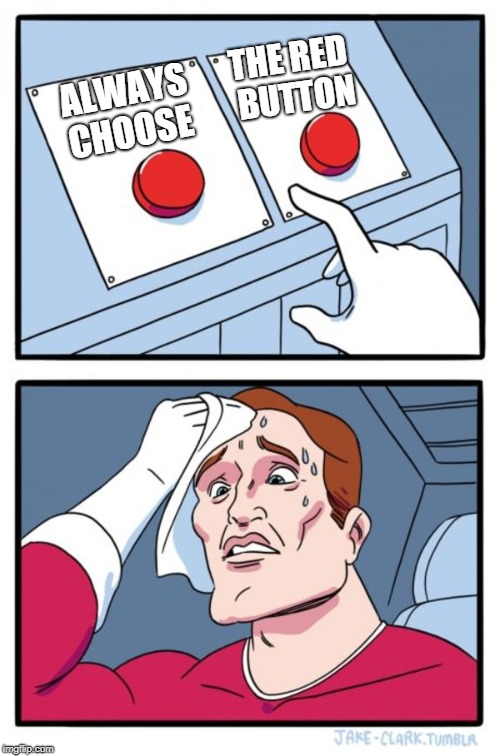
meme made with https://imgflip.com/memegenerator